Teaching the Herero Genocide in the Age of Israel’s Genocide in Gaza
This semester I’m teaching a novel I’ve taught many times before, but this time it feels different. Peter Moor’s Journey to Southwest Africa is a simple adventure story set against the backdrop of what has been described as the first genocide of the 20th century: the planned starvation, forced discplacement, and mass murder of the Ovaherero of present-day Namibia. When Heidemarie Wieczorek-Zeul, Germany’s development aid minister, attended a ceremony to mark the 100th anniversary of the Herero uprising in Namibia in 2004, she stated (sepaking in English): “The atrocities committed at that time would have been termed genocide.”
The same ideology that led to the mass murder of the Ovaherero continues today in the genocide perpetrated against the Palestinian people by Israel in Gaza. And the ideology of genocide would, a few decades after the German murder of the Ovaherero, lead to the German murder of the European Jews, at times with the same ideologues and the same political actors. In response to the Shoah, the Convention on the Prevention and Punishment of the Crime of Genocide was adopted by the United Nations in 1948. Israel, which was a driving force in the establisment of the convention, signed the following year. Incidentally, as Dominik J. Schaller has noted, Raphael Lemkin, the international lawyer who coined the term genocide in 1944, regarded the German policy against the African inhabitants of Namibia as an unambiguous case of genocide. Unambiguous, and yet, it seems so difficult to acknowledge genocide when it is happening right before one’s eyes. Witness Frenssen’s novel, written just two years after the genocide had claimed the lives of at least 80% of the Ovaherero nation.
Peter Moor, who hails from a small town in Northern Germany, sets sail for the German colony to take part in the war against the Ovaherero. He suffers privation: hunger, thirst, sickness; he drives the struggling Herero nation to their last stance at Namibia’s Waterberg, and he joins in forcing the desparate people into the Omaheke desert, where they will perish of thirst and hunger. Here he fights alongside General Lothar von Trotha, who issued his infamous proclamation October 1904:
I, the great general of the German soldiers, send this letter to the Hereros. The Hereros are German subjects no longer. They have killed, stolen, cut off the ears and other parts of the body of wounded soldiers, and now are too cowardly to want to fight any longer. I announce to the people that whoever hands me one of the chiefs shall receive 1,000 marks, and 5,000 marks for Samuel Maherero. The Herero nation must now leave the country. If it refuses, I shall compel it to do so with the ‘long tube’ (cannon). Any Herero found inside the German frontier, with or without a gun or cattle, will be executed. I shall spare neither women nor children. I shall give the order to drive them away and fire on them. Such are my words to the Herero people.

When Gustav Frenssen published Peter Moor’s Journey to Southwest Africa in 1906, he was already an established writer. He wrote in the genre of Heimatliteratur, which was broadly concerned with asserting what was considered to be traditional values in the face of massive social upheaval in Germany in the second half of the 19th century: rural poverty, mass emigration, rapid urbanization, various financial crises, and the like. In this respect you could look at it as the aesthetic branch of the MAGA movement in Germany at the time. Make Germany Great Again.
Frenssen died in April 1945, just weeks before Hitler committed suicide. Ever since Hitler had come to power in 1933, Frenssen had openly supported the National Socialists. In 1936 he founded the Eutiner Dichterkreis, a group of writers openly supporting Nazi ideals, and in 1938, Hitler awarded him the Goethe Prize for Art and Science. On every front, as the age of German colonialism morphed into German fascism, Frenssen saw himself validated in his artistic quest to Make Germany Great Again.
Part of making Germany great again was the acquisition of colonies. All the other major European powers were deeply invested in land theft and forced, unfree black labour, so why not the Germans too?
When Bismarck called the so-called Congo-Conference in 1884 to ensure European consensus on the land theft, Germany was left with a large, arid colony they called German Southwest Africa.

On the ground, the minting of the new colony meant little more than a continuation of existing policies: the disinheritance of the local population was ensured by a combination of shady contractual deals, coersion, and violence. In 1904, the Ovaherero had had enough, and they began an armed insurrection. The German response was swift and brutal, and just like Israel’s response to the Hamas murders of Israeli citizens, it took the resistance to colonization as grounds for genocide.

Frenssen never set foot in the African colony. He collected letters, postcards, memoirs; he interviewed soldiers, and studied the war reports of the Colonial Office. In a telling conversation in the novel, one that comes as a surprise to the reader, one of the old soldiers points out that the Herero insurrection is a struggle for liberation, just like the liberation struggle the Germans had fought against the French. He asks: “Children, how should it be otherwise? They were ranchmen and proprietors, and we were there to make them landless workingmen; and they rose up in revolt. They acted in just the same way that North Germany did in 1813. This is their struggle for independence.”
I say this is a surprise, because so far, the novel has done its best, in subtle and not so subtle ways, to equate black Africans with animals, robbing them of any human qualities that would legitimate resistance to colonization. And yet, what is being raised here is something that has to be said in the novel, since the ideology of colonization raises serious contradictions within the dominant disscourses of the day. Given the fact that resistance to forced colonization is legitimate, and given the fact that Christianity requires love and respect for one’s fellow humans, isn’t this war wrong in every respect? The soldier continues: “Either it is right to colonize, that is, to deprive others of their rights, to rob and to make slaves, or it is just and right to Christianize, that is, to proclaim and live up to brotherly love. One must clearly desire the one and despise the other; one must wish to rule or to love, to be for or against Jesus. The missionaries used to preach to them, ‘Ye are our brothers,’ and that turned their heads.”
The response comes swiftly, wiping these arguments off the table with a social Darwinist declaration: “They are not our brothers, but our slaves, whom we must treat humanely but strictly. These ought to be our brothers? They may become that after a century or two. They must first learn what we ourselves have discovered, — to stem water and to make wells, to dig and to plant corn, to build houses and to weave clothing. After that they may well become our brothers.” Toward the end of the novel, we see how such social Darwinism will lead not to humane strictness, but to murder. When a Herero man is captured, one of the German soldiers declares: “ The missionary said to me, ‘Beloved, don’t forget that the blacks are our brothers.’ Now I will give my brother his reward.” The soldier pushes the Herero man off and says: “Run away!” He is then shot in the back as he runs. In the conversation that ensues, the same argument for murdering the supposedly less-civilized Ovaherero is made: “These blacks have deserved death before God and man, not because they have murdered two hundred farmers and have revolted against us, but because they have built no houses and dug no wells.”
The first step in genocide is always discursive, and it always involves a dehumanization of the victims. When I read Peter Moor today, I am struck by the way a dehumanizing ideology of civilization and progress, coupled with theological arguments, continues to legitimate genocide in Gaza 120 years after the genocide in German Southwest Africa. Two days after the Hamas attack on Israeli citizens, Israeli Defense Minister Yoav Gallant stated: “There will be no electricity, no food, no water, no fuel, everything will be closed. We are fighting against human animals and will act accordingly.” This builds on some of the founding ideas legitimizing the Jewish settlement of Palestine, including the idea that god had promised the land to Israel.
I can’t resist pointing out that Frenssen’s novel ends with one of the most amusing examples of narrative incompetence I have come across. The closing paragraph reads: “When I was sauntering along the Jungfernstieg [in Hamburg] in my worn-out, dirty cord uniform, with dark, sunburned face, a middle-aged man came up and joined me, and asked me all sorts of questions as we went along. In the course of the conversation it came out that I had heard of him in my father’s house; for he had known my father from childhood. I related to him all that I had seen and experienced, and what I had thought of it all. And he has made this book out of it.”
As the German philosopher and essayist Leo Berg wrote in a review of Frenssen’s novel in 1907: “That really is a joke … Either the book is the soldier’s report, and he cannot say this, or else Frenssen turned the report into the book, and then it’s something the soldier really cannot know.”
The impossibility of this narrative position mirrors the impossibility of the novel’s claims to truth, just as the discourses legitimating genocide are riddled with lies and contradictions. Unfortunately, the reader isn’t confronted with this narrative ruse until the novel it over, but by now, the witness of history should be able to see genocide coming long before it happens.


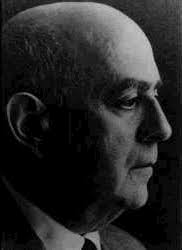 32, Theodor Adorno gave a talk to the Frankfurt chapter of the Kant Society, which he called The Idea of Natural History. It’s hard to imagine how his listeners walked away with any sense of purpose to this thinly veiled attack on what Adorno considered recent misappropriations of Kant, reserving most disdain for Heidegger.
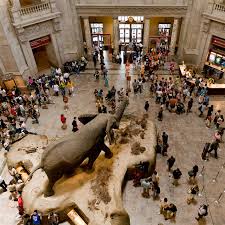 it reminds us of museums. What he really wanted to talk about was the dialectical relationship of the concept “nature” and the concept “history,” which is to say that you cannot understand the idea of nature without thinking about history, and you can’t understand the idea of history without thinking about nature. But then again, maybe museums of natural history are just what we should be thinking of.
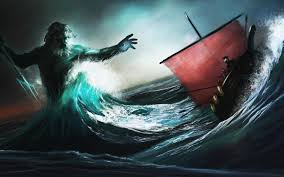 scary, so we have to tell ourselves stories about this part of nature to make life bearable. Those stories are myths.Now capitalism requires reason to have an interesting relationship with myth, because it needs reason to have a special relationship with nature. Reason in capitalism is supposed to be used to exploit nature and to make it profitable, not to express the essence of human life, creativity. So this affects how we think about nature.Every day, we live our lives in an environment which we have built. But we are encouraged constantly to believe that we didn’t build this world and we can’t change it. In other words we mythologize the world we have built. It becomes like nature to us, in the sense that we think of it as having sprung from nowhere, and working in ways too mysterious to grasp in their entirety. Thus we need myth: “technology is a saving force which will make life better”; “the current state of urban design is the best configuration of living space”; “freedom is the highest goal of life”; “those who own land have the right to use it however they choose”; etc. The more we tell ourselves myths about nature, human nature, how we use nature, the less we are capable of asking what needs to be done to have a more just relationship to nature, to the world we have built, and to each other.
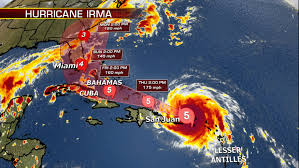 without history, and the news networks tell us the corresponding myths. “This is the worst hurricane ever.” “The storm is moving slowly across the gulf, gathering strength.” Etc. They even give the hurricanes names, like the gods of antiquity. For critical theory, demythologizing nature means talking about its history. We have built a global economic system that created these storms. So we can change that system. Capitalism only wants us to think about changing nature when the result might be increased wealth, not an improved condition of humanity. So once the storms are gone, capital can move in, clear out the poor (who are always hardest hit), and build a resort on the pretty empty beaches (with good floodwater control so the rich patrons aren’t in danger). Naomi Klein called this “disaster capitalism” in The Shock Doctrine.
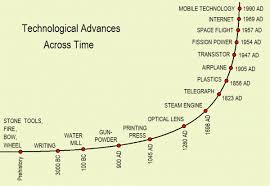 entirety of the world has no history – it presents us with choices about how we want to use it, now. We can think of history not as an irrepressible force, but as a single moment, an objective configuration of people and things that can be changed in any way we want. This allows us to understand that at any one moment in history, capitalism presents us with choices that are affected by the way we talk about history: Do I talk about history as a force of nature that makes capitalism look inevitable? Or, do I talk about history as series of missed opportunities for humans collectively to express their humanity? Demythologized history is a process of constantly, at every single moment, asking what can be done to make the world better for everyone.
 Freund Humanus