Why natural history isn’t for museums
by John K. Noyes
On July 7 19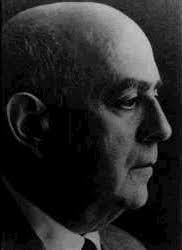 32, Theodor Adorno gave a talk to the Frankfurt chapter of the Kant Society, which he called The Idea of Natural History. It’s hard to imagine how his listeners walked away with any sense of purpose to this thinly veiled attack on what Adorno considered recent misappropriations of Kant, reserving most disdain for Heidegger.
But it does contain the memorable observation that, if the relation between nature and history is to be interrogated in any serious way, the only hope of finding an answer is to see history in its most extreme historical determination, that is, wherever it is most historical, as natural being; and conversely where nature appears most self-contained, to comprehend it as historical being.
Adorno probably would’ve been smarter not to use the term natural history, since 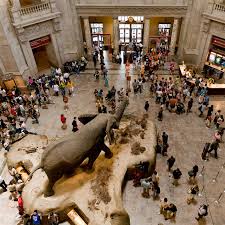 it reminds us of museums. What he really wanted to talk about was the dialectical relationship of the concept “nature” and the concept “history,” which is to say that you cannot understand the idea of nature without thinking about history, and you can’t understand the idea of history without thinking about nature. But then again, maybe museums of natural history are just what we should be thinking of.
For Adorno, because humans are creatures of reason, they will always approach nature as something they want to take control of. Taking control has both a positive and a negative side (we are after all using dialectics, everything has two sides). The negative side is exploitation of nature in the name of self-preservation. The positive side is creativity, in the sense of building environments that express your essential freedom and the essence of who you are, but also your solidarity with your fellow humans, your shared being (Marx called it species being).
But nature, being nature, will always in some way escape control by humans. This is 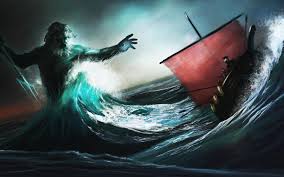 scary, so we have to tell ourselves stories about this part of nature to make life bearable. Those stories are myths.Now capitalism requires reason to have an interesting relationship with myth, because it needs reason to have a special relationship with nature. Reason in capitalism is supposed to be used to exploit nature and to make it profitable, not to express the essence of human life, creativity. So this affects how we think about nature.Every day, we live our lives in an environment which we have built. But we are encouraged constantly to believe that we didn’t build this world and we can’t change it. In other words we mythologize the world we have built. It becomes like nature to us, in the sense that we think of it as having sprung from nowhere, and working in ways too mysterious to grasp in their entirety. Thus we need myth: “technology is a saving force which will make life better”; “the current state of urban design is the best configuration of living space”; “freedom is the highest goal of life”; “those who own land have the right to use it however they choose”; etc. The more we tell ourselves myths about nature, human nature, how we use nature, the less we are capable of asking what needs to be done to have a more just relationship to nature, to the world we have built, and to each other.
The best way to demythologize nature is to look at it as historical process. Think of climate change. Capitalism wants us to think of the devastating hurricanes as events 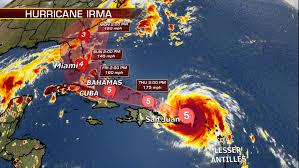 without history, and the news networks tell us the corresponding myths. “This is the worst hurricane ever.” “The storm is moving slowly across the gulf, gathering strength.” Etc. They even give the hurricanes names, like the gods of antiquity. For critical theory, demythologizing nature means talking about its history. We have built a global economic system that created these storms. So we can change that system. Capitalism only wants us to think about changing nature when the result might be increased wealth, not an improved condition of humanity. So once the storms are gone, capital can move in, clear out the poor (who are always hardest hit), and build a resort on the pretty empty beaches (with good floodwater control so the rich patrons aren’t in danger). Naomi Klein called this “disaster capitalism” in The Shock Doctrine.
You can think about history in similar terms. History can be looked at as a force that makes it inevitable that the world has turned out the way it is. This amounts to turning historical processes into myths. Nothing will ever change because history has shown that it’s really always been like this. The poor will always be poor, the rich will always have power, etc. etc. Why should I talk about gun control? History has shown that there will always be violent people, so isn’t it better that we all have guns to defend ourselves with? This is where it’s helpful to think of history as nature. In any one moment, it is as if the 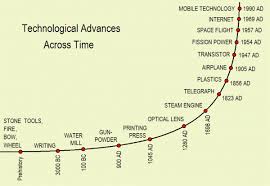 entirety of the world has no history – it presents us with choices about how we want to use it, now. We can think of history not as an irrepressible force, but as a single moment, an objective configuration of people and things that can be changed in any way we want. This allows us to understand that at any one moment in history, capitalism presents us with choices that are affected by the way we talk about history: Do I talk about history as a force of nature that makes capitalism look inevitable? Or, do I talk about history as series of missed opportunities for humans collectively to express their humanity? Demythologized history is a process of constantly, at every single moment, asking what can be done to make the world better for everyone.
 Freund Humanus